
This guide is written from the perspective of a factory that formulates and fills two-component construction adhesives every day. Most comparison articles stop at a pros-and-cons list. We have added what buyers and engineers actually ask us for: mix ratios and dispensing formats, the construction standards each chemistry is tested to, shelf life and dangerous goods shipping classes, and 2026 FOB price bands.
What Makes an Adhesive "Two-Part"?
A one-part adhesive cures from something outside the tube — moisture in the air (moisture-cure PU, silicone RTV), heat (one-part epoxies at 120–180 °C), or solvent evaporation. That limits how thick it can cure, how fast, and how strong it can get.
A two-part adhesive carries its own curing chemistry. The moment Part A meets Part B the reaction starts everywhere in the bead at once, so it cures through thick sections, inside closed joints, and in a drilled hole where no air or moisture can reach. That single property is why every genuinely structural construction adhesive is two-component.
The trade-off is process discipline. Two-part systems introduce three variables that one-part products do not have:
- Mix ratio — how much A to how much B, by weight or by volume
- Mix quality — whether the two parts are homogeneous before application
- Pot life and open time — how long you have before the mixed material is no longer usable
The Five Types of Two-Part Adhesives Compared
The table below uses typical ranges for commercial structural or engineering grades, tested on grit-blasted steel. Individual products fall outside these ranges in both directions — always check the TDS against the test method named.
| Property | Epoxy | Polyurethane (PU) | Acrylic / MMA | Silicone | Polysulfide |
|---|---|---|---|---|---|
| Lap shear strength (ISO 4587 / ASTM D1002) | 15–35 MPa | 8–20 MPa | 15–25 MPa | 1–3 MPa | 0.5–2 MPa |
| Elongation at break | 1–5% (toughened up to 10%) | 30–300% | 10–120% | 100–600% | 200–600% |
| Continuous service temperature | −40 to +80 °C (high-Tg to +150 °C) | −40 to +90 °C | −40 to +120 °C | −50 to +200 °C | −40 to +80 °C |
| Creep under sustained load | Very low | Moderate | Low–moderate | High (by design) | High (by design) |
| Handling strength at 23 °C | 2–8 h | 30 min–4 h | 5–40 min | 1–24 h | 12–48 h |
| Full cure at 23 °C | 3–7 days | 1–7 days | 24 h | 1–7 days | 7–14 days |
| Surface preparation needed | High (abrade, clean, dry) | Medium–high, must be dry | Low (tolerates light oil) | Medium, primer often | Medium, primer often |
| Gap fill / bond line | 0.1–5 mm, grouts to 100 mm | 0.5–10 mm | 0.5–5 mm (exotherm limit) | 3–25 mm joints | 5–30 mm joints |
| Moisture sensitivity during cure | Low–moderate | High (CO₂ foaming) | Low | Low | Low |
| Odour / flammability | Low | Low | Strong odour, flammable | Low | Mercaptan odour |
| Primary role | Structural load transfer | Flexible structural bonding | Fast structural bonding of mixed substrates | Elastic bonding and glazing | Elastic sealing, fuel-resistant joints |
Two readings of this table matter more than any single number:
Epoxy: The Structural Benchmark
Two-part epoxy cures by an amine or anhydride hardener reacting with epoxide groups to form a densely cross-linked network. The result is high modulus (2,500–4,500 MPa in compression for construction grades), near-zero shrinkage when solvent-free, and excellent resistance to sustained load and chemicals.
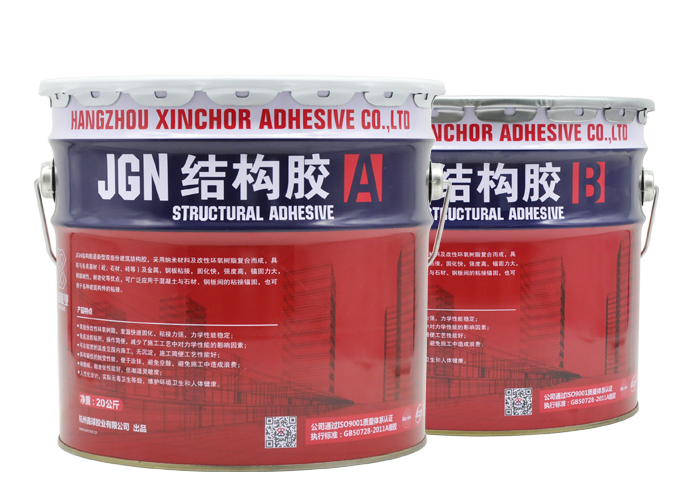
In construction, epoxy dominates because concrete strengthening codes are built around it. Our JGN steel-bonding structural adhesive, for example, is produced to China's GB 50728-2011 Class A requirements: tensile strength ≥ 30 MPa, compressive strength ≥ 65 MPa, steel-to-concrete shear ≥ 14 MPa, and a direct tensile bond to concrete of ≥ 2.5 MPa with failure in the concrete, not the adhesive.
Where epoxy is the wrong choice: joints that must accommodate thermal movement between dissimilar materials, bonds to low-energy plastics (PE, PP), jobs that need handling strength in under 15 minutes, and application below about 5 °C unless a low-temperature formulation is used.
For a deeper look at structural versus general-purpose grades, see our two-part epoxy adhesive guide.
Polyurethane: Flexible Structural Bonding
Two-part PU adhesives react a polyol (Part A) with an isocyanate (Part B). They bond well to metals, composites, wood, and many plastics, and the elastomeric network absorbs vibration, impact, and differential thermal expansion — which is why they are widely used in vehicle body panels, sandwich panels, and precast façade elements.
Two field realities limit PU in heavy construction:
- Moisture reacts with isocyanate to release CO₂. On damp concrete or in high humidity, the bond line foams, porosity rises, and strength can fall by half. This is the same chemistry that makes PU excellent as a water-stopping injection foam — and a poor structural adhesive on wet substrates. See our epoxy vs polyurethane injection comparison for how that plays out in crack repair.
- Creep under permanent load. A PU joint that holds 15 MPa for a short test will slowly deform at a fraction of that under sustained load, particularly above 40 °C. That is why no mainstream code allows PU for bonded steel plate or rebar anchoring.
Acrylic and MMA: Speed and Surface Tolerance
Methacrylate adhesives cure by free-radical polymerisation initiated by a peroxide in Part B. Most are 10:1 or 1:1 by volume. Their strengths are speed — fixture strength in 5–40 minutes — and the ability to bond through light oil and mill scale, and to plastics such as ABS, PVC, and GRP with minimal abrasion.
Two things buyers often miss:
- Many "chemical anchor" cartridges are methacrylate-based. Vinyl-ester and methacrylate hybrid anchoring resins in 10:1 coaxial cartridges use the same peroxide-initiated cure. They set in 10–45 minutes versus hours for epoxy, but they shrink more and are less tolerant of wet or poorly cleaned holes. Our vinyl ester vs epoxy chemical anchor comparison covers the load-rating differences.
- MMA is flammable and heavily regulated in transport. Flash points around 10 °C mean Class 3 dangerous goods for sea and air freight, which adds cost and limits container consolidation.
Silicone and Polysulfide: Elastic Sealant-Adhesives
Two-part silicones (condensation or addition cure) are the only adhesives approved for structural silicone glazing, where glass is held to the frame by the sealant alone. Design is based on low allowable stress — commonly 0.14 MPa (20 psi) for wind load under ASTM C1401 guidance — with the joint sized to keep stress under that value. They offer the widest service temperature and outstanding UV resistance.
Two-part polysulfides are the traditional secondary seal for insulating glass units and the sealant of choice for fuel-exposed joints: airport aprons, petrol station forecourts, and tank containment. They are classified by movement capability, typically ISO 11600 F 25LM (±25%).
One point that trips up buyers: elongation at break is not a movement rating. A polysulfide listing 500% elongation may still be rated for only ±25% joint movement under ASTM C920 or ISO 11600. Design the joint width from the movement class, never from the elongation figure.
Neither belongs in load-bearing structural bonding of concrete or steel.
Matching Two-Part Adhesive Type to Construction Application
This is the table we use internally when an enquiry arrives with only "we need a two-part adhesive" in it.
| Application | Correct chemistry | Governing standard / reference | Why |
|---|---|---|---|
| Steel plate bonding to concrete | Epoxy | EN 1504-4, GB 50728, ACI 440.2R (for FRP) | Sustained load, zero creep tolerance |
| CFRP plate and fabric bonding | Epoxy | ACI 440.2R, EN 1504-4 | Modulus match, Tg above service temperature |
| Post-installed rebar and anchors | Epoxy or vinyl ester / methacrylate | EAD 330499 (ETA), ICC-ES AC308 | Sustained load and seismic qualification |
| Structural crack injection | Low-viscosity epoxy | ASTM C881 Type IV, EN 1504-5 | Restores monolithic section |
| Water-stopping crack injection | PU foam or acrylic gel | EN 1504-5 (ductile) | Seals active leaks; not structural |
| Precast segment joints | Epoxy (thixotropic) | fib / PTI segment adhesive guidance | Compression + shear through joint |
| Epoxy grout under baseplates | Epoxy grout | ASTM C579, API 686 | Vibration and chemical exposure |
| Expansion and movement joints | PU or polysulfide sealant | ISO 11600, ASTM C920 | ±25% movement |
| Structural glazing | 2K silicone | ASTM C1184, EN 15434 | UV stability, elastic load path |
| GRP / composite panel assembly | MMA or PU | Manufacturer qualification | Speed, bonds plastics |
If your joint is load-bearing and permanently loaded, the shortlist is epoxy — then choose the grade by temperature, viscosity, and cure time. Our structural adhesive temperature resistance guide explains how to set the Tg requirement.
Reading ASTM C881 and EN 1504-4 on a Purchase Order
For epoxy bonding systems used on concrete, two standards do most of the work, and both are frequently misquoted in tenders.
| Standard | What the code means | How to write it on a PO | What it does not cover |
|---|---|---|---|
| ASTM C881 — Type (I–VII) | Intended use: bonding hardened concrete, bonding fresh-to-hardened, non-load-bearing, load-bearing, etc. Type IV = load-bearing bonding of hardened concrete | "Epoxy, ASTM C881 Type IV, Grade 1, Class C" | Creep and creep rupture are explicitly outside its scope |
| ASTM C881 — Grade (1–3) | Viscosity / flow: Grade 1 low-viscosity (injection), Grade 2 medium, Grade 3 non-sag gel | Match to method: Grade 1 for crack injection, Grade 3 for vertical and overhead bonding | Sag on thick vertical layers beyond the test geometry |
| ASTM C881 — Class (A, B, C) | Application temperature: A below 4 °C, B 4–15 °C, C above 15 °C | Specify the class for the actual site temperature, not the annual average | Performance above the stated class range |
| EN 1504-4 | Structural bonding: shear, compressive strength, modulus, shrinkage, glass transition, thermal expansion | "EN 1504-4 structural bonding, with DoP / AVCP system 2+ certificate number" | Post-installed anchors, which need an ETA under EAD 330499 |
The practical takeaway: a C881 test report proves the adhesive meets short-term acceptance criteria. It does not qualify a product for anchoring, and it does not answer sustained-load design questions. For those, request creep data and retained strength after water and thermal conditioning. For bonded CFRP, check field pull-off results under ASTM D7522 — and record the failure plane, because a 2.5 MPa result with failure in the concrete means something very different from 2.5 MPa failing in the adhesive.
Mix Ratios, Packaging and Dispensing Formats
Mix ratio drives packaging, and packaging drives both cost and error rate on site. This is the information most comparison guides leave out.
| Chemistry | Common mix ratios | Typical packaging | Ratio tolerance before properties drop |
|---|---|---|---|
| Construction epoxy | 1:1, 2:1, 3:1 by volume; 100:25–100:50 by weight | 400/585/600 ml side-by-side cartridges; 5–20 kg A+B pail sets | About ±5% |
| Anchoring epoxy | 1:1, 3:1 by volume | 360–600 ml side-by-side cartridges | About ±5% |
| Vinyl ester / methacrylate anchor | 10:1 by volume | 300–420 ml coaxial cartridges | ±10% (peroxide-initiated, more forgiving) |
| PU structural | 1:1, 2:1 by volume | 50–400 ml cartridges; drums for meter-mix | About ±5% |
| MMA | 1:1, 10:1 by volume | 50–490 ml cartridges; 20 kg pails | ±10% |
| 2K silicone | 10:1 or 13:1 by weight; 1:1 addition-cure | 200 L base + 20 L catalyst for machine mixing | ±10% |
| 2K polysulfide | 10:1 by weight | Pre-proportioned tins, 5 kg | ±10% |
Practical rules we give contractors:
- Know whether the ratio is by weight or by volume. Parts A and B rarely have the same density. A silicone sold as 10:1 by weight is closer to 7.8:1 by volume; a filled epoxy at 100:30 by weight can be near 2:1 by volume. Using the wrong basis is one of the most expensive mixing mistakes on site.
- Never split a pail set by eye. A 20% off-ratio epoxy mix can lose 30–50% of its tensile strength and leave unreacted, soft pockets. If the job needs half a set, weigh both parts on a scale.
- Waste the first bead from a cartridge. Discard the first 5–10 cm through a new static mixer until the colour is uniform. Two-colour systems (for example white A and black B curing to grey) make this visible.
- Match the static mixer to the cartridge. A 1:1 epoxy needs a mixer with enough elements (typically 16–24) for its viscosity. A short mixer from another brand looks fine and delivers streaky, under-mixed material.
- Pot life halves for every 10 °C rise. A grade with 60 minutes pot life at 25 °C gives roughly 30 minutes at 35 °C — and a large mixed mass in a bucket runs hotter still from its own exotherm.
- Track four clocks, not one. *Pot life* (usable in the bucket), *open time* (bondable after spreading), *handling time* (can be moved without disturbing the bond), and *loading time* (can carry design load). A TDS that gives only "cure time" is not enough to plan a summer or winter installation.
Shelf Life, Storage and Shipping Classes
For importers, the logistics profile of each chemistry often decides the landed cost as much as the unit price.
| Chemistry | Unopened shelf life (5–30 °C) | Common transport classification | Storage notes |
|---|---|---|---|
| Epoxy resin (Part A) | 18–24 months | Often UN 3082, Class 9 | Can crystallise below 10 °C; warm to 40 °C to restore |
| Amine hardener (Part B) | 12–24 months | Often UN 2735 or UN 1759, Class 8 | Keep sealed; absorbs CO₂ and moisture |
| PU (isocyanate part) | 6–12 months | Varies; many grades non-DG | Moisture-sensitive; nitrogen-blanketed drums |
| MMA / methacrylate | 6–12 months | Class 3 flammable; kits may ship as UN 3269 | Store below 25 °C; heat shortens life sharply |
| 2K silicone | 9–12 months | Usually non-DG | Catalyst part is moisture-sensitive |
| 2K polysulfide | 9–12 months | Usually non-DG | Stir base before use |
Always confirm the classification from the product's own SDS section 14 — formulations differ, and the forwarder will quote from the SDS, not from a table. Dangerous-goods surcharges on a 20 ft container of mixed Class 8 and Class 9 product typically add USD 300–800 to ocean freight from Ningbo, and some lines refuse Class 3 consolidation entirely.
2026 Price Bands: What Two-Part Adhesives Cost
Indicative FOB China prices for industrial and construction grades in 2026. Branded Western products at distributor level typically sell for 2–4× these figures.
| Product type | Packaging | FOB price band (USD) | Typical MOQ |
|---|---|---|---|
| Construction structural epoxy (steel / CFRP bonding) | 5–20 kg sets | 3.50–7.00 per kg | 300–500 kg |
| Epoxy crack injection resin | 5–20 kg sets | 4.00–8.00 per kg | 300 kg |
| Epoxy anchor adhesive | 360–600 ml cartridges | 1.80–4.50 per cartridge | 1,000 pcs |
| Vinyl ester / methacrylate anchor | 300–420 ml cartridges | 1.20–2.80 per cartridge | 1,000 pcs |
| PU structural adhesive | Cartridges / pails | 5.00–10.00 per kg | 500 kg |
| MMA structural adhesive | 50–490 ml cartridges / pails | 8.00–18.00 per kg | 500 kg |
| 2K silicone (glazing / IG) | 190–200 L sets | 4.50–9.00 per kg | 1 set |
| 2K polysulfide (IG / joints) | 5 kg tins / drums | 2.80–6.00 per kg | 500 kg |
Prices move with epoxy resin (bisphenol-A) and amine feedstock costs, which swung by roughly 15% during 2025. Compare cost per installed unit, not per kilogram. Construction epoxies are 1.4–1.8 g/cm³ with filler, so a worked example is: USD 6.00/kg × 1.7 kg/L × 2 mm bond line = USD 20.40 per m² before 10–15% waste, primer, mixer nozzles and labour. For anchors, divide cartridge price by the number of holes per cartridge at your diameter and embedment — a cheaper resin that fills fewer holes is not cheaper. For a full breakdown of what to request from a supplier, read our structural adhesive supplier qualification guide.
Five Specification Mistakes We See Every Month
How XINCHOR Tests Two-Part Adhesives
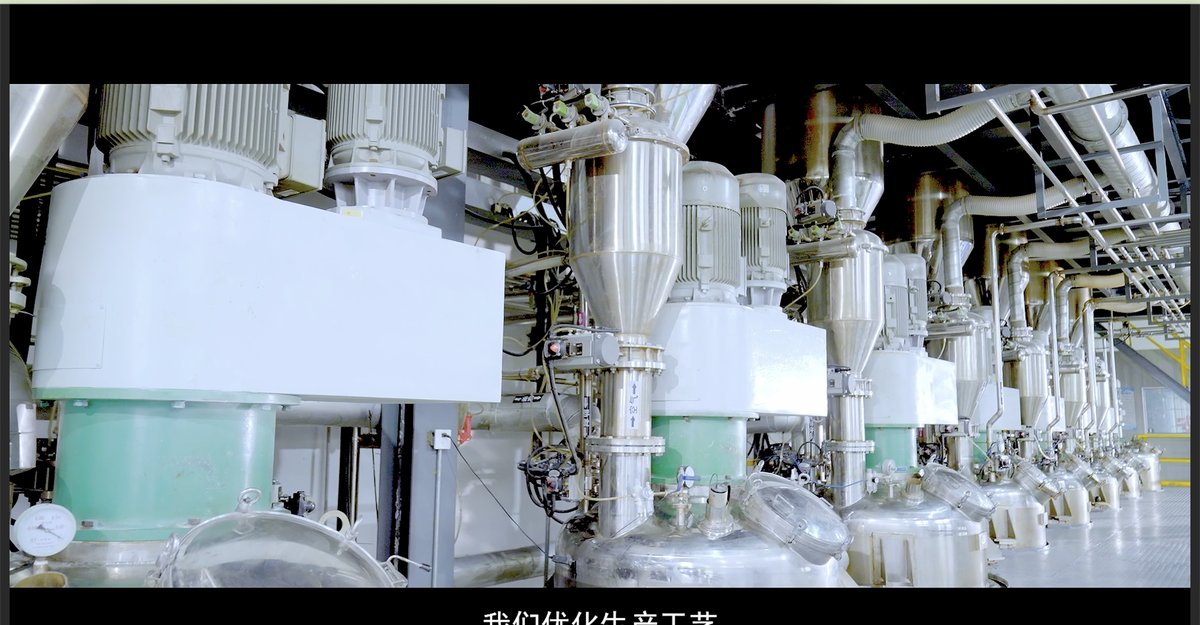
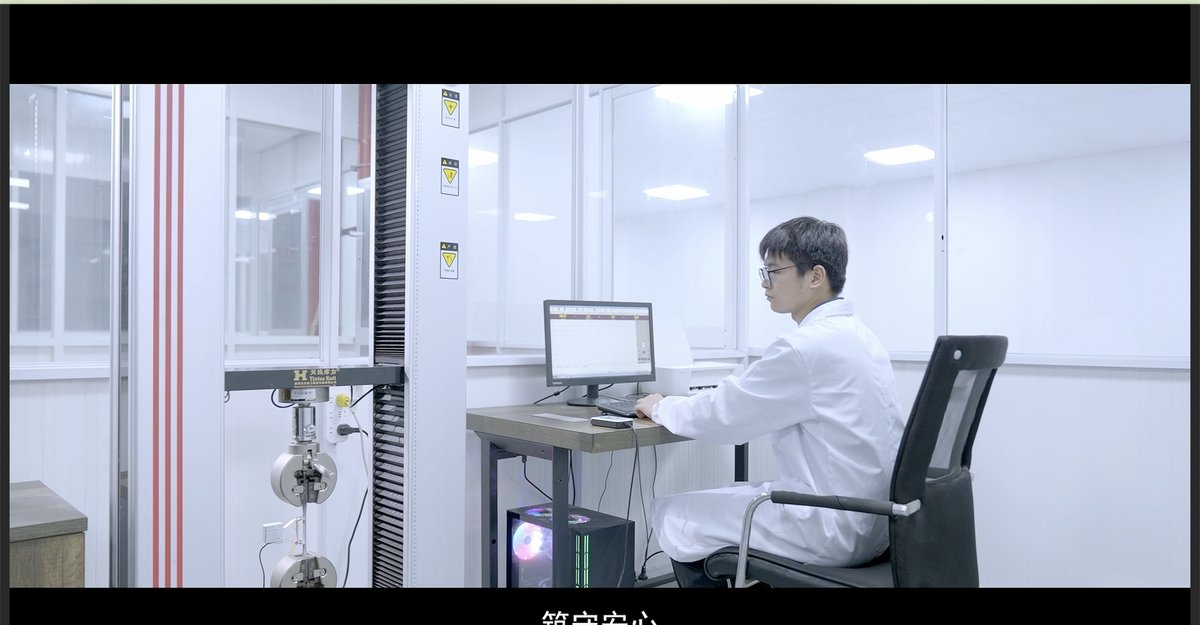
Every batch of structural epoxy leaving our plant is checked for mixed viscosity, gel time at 25 °C, and tensile and compressive strength on cast specimens, and is shipped with a certificate of analysis tied to the batch number. Steel-to-steel shear, steel-to-concrete bond, and Tg by DSC are run on qualification batches and on customer request. If you are comparing our grades against an existing product, send the incumbent TDS and we will return a side-by-side test plan using the same methods.
Related Guides
- Two-part epoxy adhesive: structural vs general purpose
- Structural epoxy adhesive for steel bonding
- Metal-to-concrete adhesive bonding guide
- Heavy-duty construction adhesive guide
- Precast segment splicing adhesive for bridges
- Browse the steel bonding adhesive range, anchor adhesive range, and CFRP plate adhesive
Frequently Asked Questions
What are the main types of two-part adhesives?
The five main types are epoxy, polyurethane, acrylic (including MMA), silicone, and polysulfide. Epoxy and acrylic are rigid-to-semi-rigid structural adhesives with lap shear strengths of roughly 15–35 MPa. Polyurethane is a flexible structural adhesive in the 8–20 MPa range. Silicone and polysulfide are elastic sealant-adhesives with strengths of a few MPa and elongation of several hundred percent, used where joints must move.
What is the strongest two-part adhesive?
For sustained structural loads, two-part epoxy. Toughened structural epoxies reach 25–35 MPa lap shear on steel with very low creep, and construction grades exceed 65 MPa in compression. Some MMA grades match epoxy in short-term lap shear, but epoxy retains its strength better under permanent load and elevated temperature, which is why codes for bonded steel plate and CFRP are written around epoxy.
Is two-part epoxy better than two-part polyurethane?
It depends on the joint. Epoxy is stronger, stiffer, and more creep-resistant, so it is better for load-bearing bonds to concrete and steel. Polyurethane is better where the joint must absorb vibration, impact, or thermal movement between dissimilar materials, such as panels or vehicle bodies. On damp substrates, epoxy is usually the safer choice because PU reacts with moisture and can foam.
How accurate does the mix ratio need to be?
For epoxy and polyurethane, stay within about ±5% of the stated ratio. Larger errors leave unreacted resin or hardener that reduces strength and chemical resistance permanently — extra hardener does not make the cure faster. Peroxide-initiated MMA and vinyl ester systems tolerate roughly ±10%. Cartridges with static mixers remove most of this risk, which is why they are preferred on construction sites.
How long does a two-part adhesive take to cure?
Handling strength ranges from 5–40 minutes for MMA, 30 minutes to 4 hours for PU, and 2–8 hours for construction epoxy at 23 °C. Full cure takes 24 hours for MMA and typically 3–7 days for epoxy. Cure time roughly doubles for every 10 °C drop, so at 10 °C an epoxy that is loadable in 24 hours at 23 °C may need two to three days.
Can two-part adhesives be used on wet concrete?
Only grades specifically formulated and tested for it. Standard epoxies lose bond on saturated surfaces, and polyurethanes foam. Moisture-tolerant epoxies meeting ASTM C881 bonding requirements on damp concrete, or underwater epoxy grouts, are the correct choice. Always remove standing water and verify the product data sheet lists damp or wet substrate bond values.
What shelf life should I expect when importing two-part adhesives?
Plan on 18–24 months for epoxy resins, 12–24 months for amine hardeners, and 6–12 months for polyurethane, MMA, silicone, and polysulfide, stored unopened between 5 and 30 °C. For long sea routes, ask the supplier to ship within 30 days of production and print the manufacturing date for both Part A and Part B on every unit. Negotiate a minimum remaining shelf life on arrival — 12 months is a reasonable target for epoxy.
---
*XINCHOR manufactures two-component structural epoxies, anchor adhesives, CFRP bonding resins, injection resins, and grouts for contractors and distributors in over 40 countries, with OEM and private-label supply and a certificate of analysis on every batch. Contact XINCHOR for a free two-part adhesive selection review — WhatsApp: +86 133 3618 3725 | Email: info@xinchor.com*